Lisbon is not a city that lets you forget your feet. The sidewalks are patterned in black and white calçada, small limestone cubes set by hand into waves, stars, ships, and city crests. The streets climb because Lisbon was built on hills, and the reward for the climb is usually a view: red roofs falling toward the Tagus, laundry moving above an alley in Alfama, a yellow tram rounding a corner with the patience of something older than traffic.
Portugal is often sold through food, wine, and blue-tile photographs. Those are all real. But the country also has a strong walking logic. It is a place of old port cities, pilgrim roads, river valleys, fishing towns, national parks, and stone lanes that were never designed for sightseeing from a vehicle. The good parts often appear between the stops.
That is why Portugal works so well for walkers who want substance without needing the trip to feel like a test. It has hills and texture. It has cobblestones and vineyard paths. It also has cafes, river boats, shaded plazas, good meals, and a culture that understands the value of sitting down at the right moment.
Lisbon Teaches You to Slow Down
A first walk through Lisbon can feel like a lesson in surfaces. Smooth tile gives way to polished stone. Narrow lanes open into miradouros, those hilltop viewpoints where locals and visitors stand together because the city insists on being looked at from above. In Belém, the Age of Discovery is carved into Manueline stone at Jerónimos Monastery, and the pastry counter nearby tells another kind of history: warm custard tarts, cinnamon, and a recipe that has outlasted empires.
The city is not flat, and that matters. Travelers who are used to level sidewalks should expect short climbs, uneven paving, and the kind of downhills that make good shoes more important than fashionable shoes. But Lisbon also breaks itself into pieces. You do not need to conquer it. You walk a neighborhood, pause, listen, eat, look up, and then walk again.
North Toward Porto
A Portugal walking journey becomes richer as it moves north. Sintra rises into pine-covered hills, with Pena Palace perched above the town like a dream someone forgot to make subtle. Nazaré brings the Atlantic into the story: a fishing town watched from the cliffs above, where winter waves can grow to impossible scale offshore. Aveiro softens the day with canals, Art Nouveau facades, and boats painted in colors that feel cheerful even under cloud.
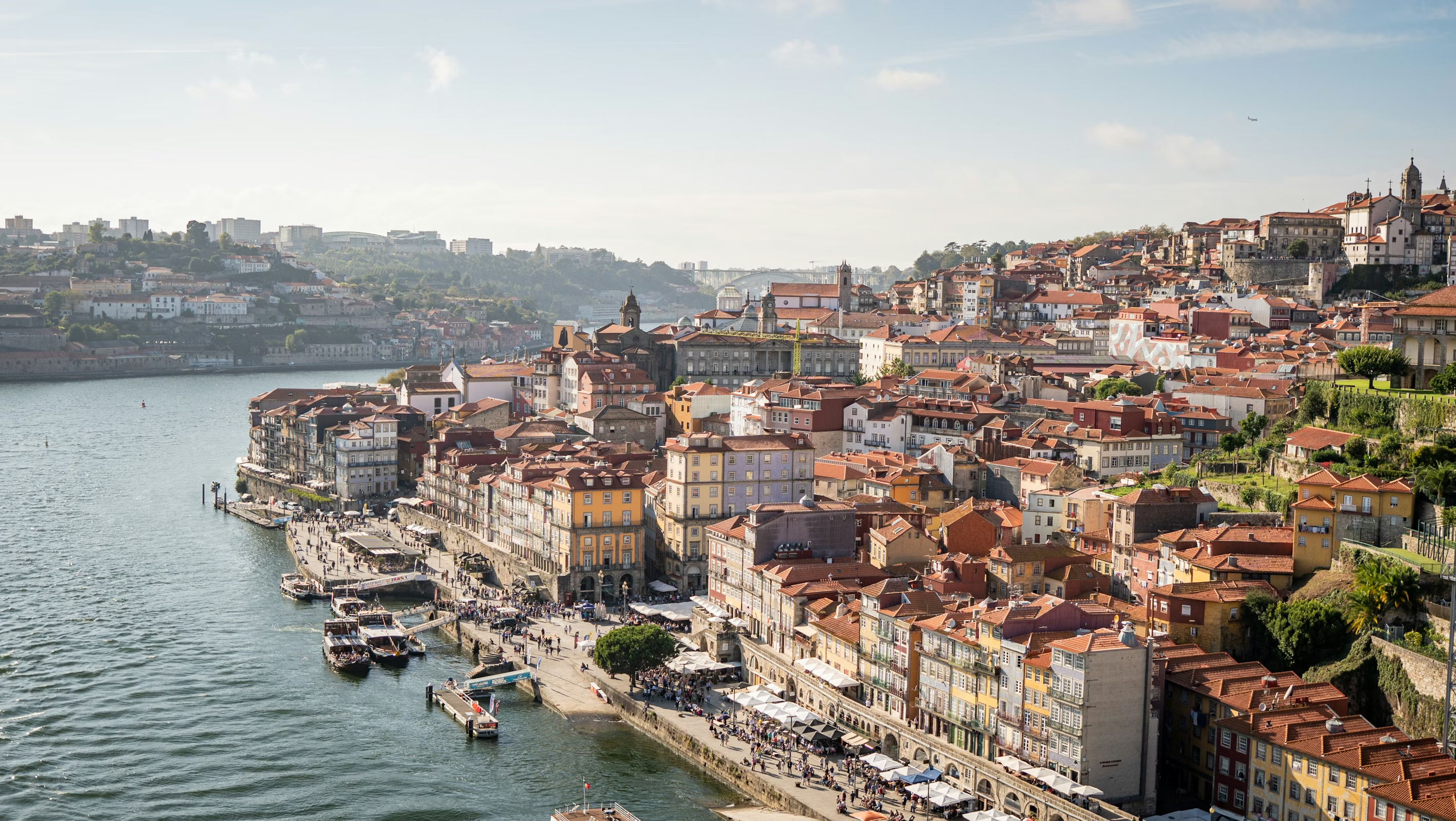
Then Porto changes the register. The city drops steeply to the Douro River, medieval streets stacked above the Ribeira waterfront, laundry lines and church bells and the Dom Luís I Bridge carrying people between Porto and Vila Nova de Gaia. Port wine is aged across the river, and tasting it there is different from tasting it anywhere else because the landscape finally explains the glass.
The Douro Valley is not merely scenic. It is engineered by hand and time. Terraces cut into the hillsides hold vines in lines that follow the river's bends. The walking here is less about distance than attention: stone walls, olive trees, vineyard tracks, the geometry of labor made beautiful by repetition.
Portugal is a walking country because the best moments are often not at the landmark. They are on the way to it.
The Gift of a Flexible Day
One reason Portugal suits many active older travelers is that the country offers more than one rhythm. Mainland walking can move from city streets to coastal viewpoints to vineyard lanes. A Douro River program can make the ship a comfortable home base, with walking at ports of call and the option to rest on board when a lighter day is the wiser choice.
That flexibility is not the same as doing very little. Vineyard walks still involve slopes. Old towns still have steps and uneven stone. But Portugal often gives you ways to shape the day without losing the point of the trip. Some vineyard walks can be routed mostly downhill. Some routes can be shortened. Some days let the river carry part of the experience.
For travelers wondering whether they can keep up, the better question is not simply How many miles? It is What kind of miles? Cobblestones feel different from packed trail. Downhill vineyard paths feel different from city stairs. A ship-based itinerary feels different from changing hotels. WAI’s Adventure Pace ratings exist because those differences matter.
Older Roads, Longer Memory
In northern Portugal, the walking story reaches farther back. Peneda-Gerês National Park, Portugal's only national park, holds granite villages, mountain paths, and sections of the Via Nova, a Roman road built nearly two thousand years ago to connect Bracara Augusta, now Braga, with Asturica Augusta in present-day Spain. Original stones remain in places, worn by hooves, feet, rain, and time.
Walking an old road changes how history feels. A monument asks you to stand in front of it. A road asks you to move across it. You understand the past through your calves and balance: why a bridge mattered, why a town gathered beside water, why a valley became a route rather than a view.
Ponte de Lima, one of Portugal's oldest towns, carries that feeling well. Its bridge stretches across the Lima River with Roman origins and medieval additions, and the town has the calm self-possession of a place that does not need to perform charm. It has had centuries to become itself.
Who Portugal Suits
Portugal is a strong fit for travelers who like cultural depth with their walking. It is for people who want a day to include a trail or city walk, but also a port cellar, a market, a tile facade, a good lunch, and time to understand why the place looks and tastes the way it does.
- Bring shoes with good grip. Polished stone and cobblestones can be slick, especially after rain.
- Expect hills in Lisbon and Porto. Short climbs add up, even when the total mileage is modest.
- Use walking poles only where they make sense. They help on paths, but can be awkward in busy cities.
- Leave room in the day for food. Portugal is not a destination to rush through meals.
- Choose the itinerary rhythm that fits you: hotel-based walking for variety, or river-based walking for a steadier home base.
Portugal is not a country you need to overpower. It is a country to follow: downhill to the river, uphill to the viewpoint, around the corner toward the sound of plates and conversation. Walk it well, and the trip becomes less about covering ground than learning how much a place can reveal at human speed.